NextGen Tech Training Program
Helping aspiring Nigerian software engineers move beyond learning code to solving problems, building projects, and developing industry-ready engineering skills.
Developing The People Behind The Technology
Technology creates possibilities, but people are the ones who build, maintain, and advance the systems that move society forward.
The NextGen Tech Training Program gave me the opportunity to contribute beyond software development by helping aspiring technology professionals develop the technical knowledge, problem-solving abilities, and confidence required to build software.
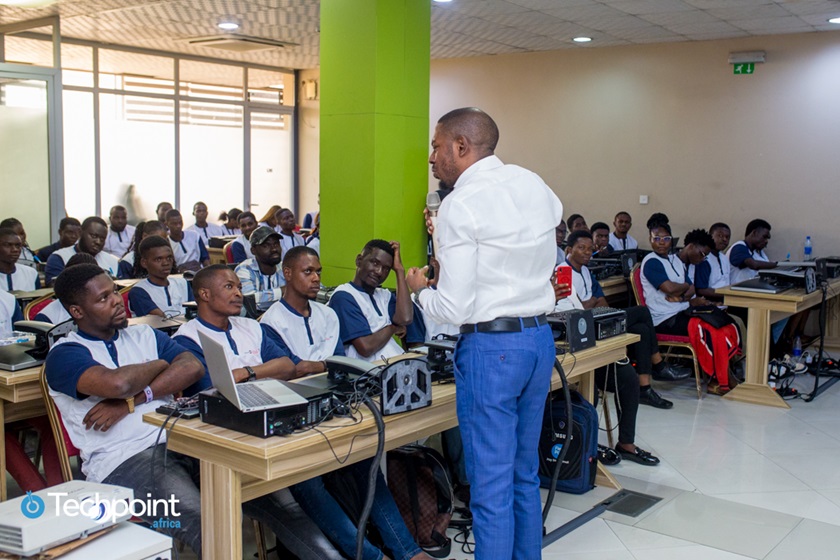
I served as a Software Engineering Instructor at the JM Tech Centre in Ikun-Ekiti, Ekiti State, where I taught and mentored participants enrolled in the programme's Software Engineering track.
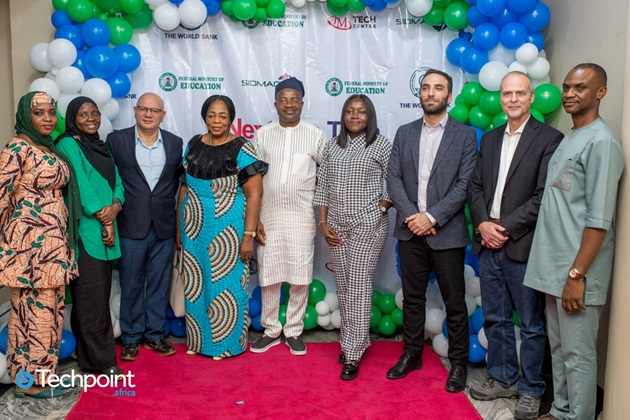
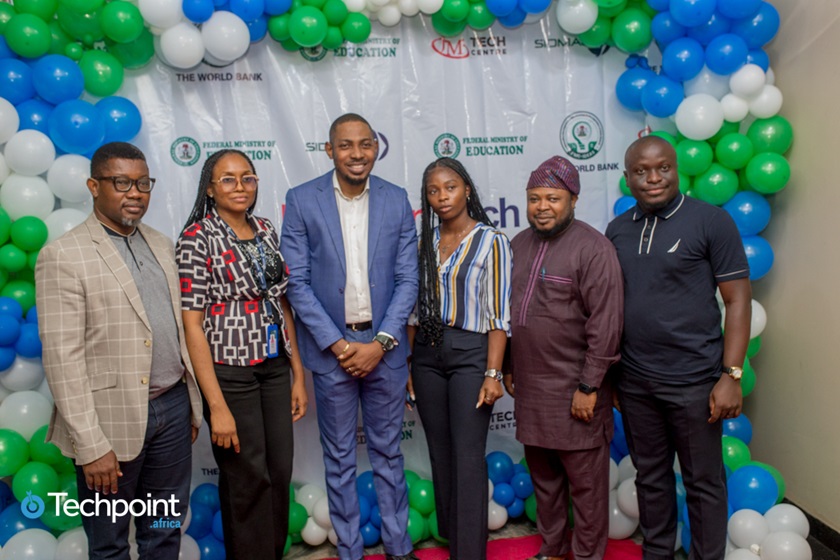
The six-month digital skills development initiative was spearheaded by the Federal Government of Nigeria through the Federal Ministry of Education and financed by the World Bank under the Innovation Development and Effectiveness in the Acquisition of Skills (IDEAS) Project. It was implemented by a consortium of Sidmach Technologies and JM Tech.
The programme introduced participants to disciplines including Software Engineering, Data Science, Digital Marketing, UI/UX Design, Cybersecurity, and Cloud Computing, combining classroom instruction with practical projects, mentorship, internships, and career development.
My role was to help turn that learning opportunity into practical technical capability.
The Challenge
The programme brought together learners with different educational backgrounds, professional experiences, and levels of technical exposure.
Some participants were encountering programming concepts for the first time, while others were developing skills they hoped to apply professionally.
This required more than simply following a curriculum.
I needed to explain complex engineering concepts in accessible ways, adapt to different learning speeds, identify areas where participants were struggling, and connect theoretical lessons to practical development scenarios.
The central challenge was helping learners understand not just how to write code, but how to think like software engineers.
My Role As A Software Engineering Instructor
My responsibilities extended across technical instruction, practical exercises, mentorship, and project-based learning.
I focused on helping participants understand how software is:
Designed around real problems
Broken down into manageable technical tasks
Developed using appropriate tools and programming concepts
Tested, debugged, and improved
Structured for maintainability and future growth
Rather than treating programming as a collection of syntax rules, I encouraged learners to understand the reasoning behind their technical decisions.
The goal was to help them progress from simply following tutorials to developing the confidence and ability to build functional software.
What I Delivered
1. Practical Software Engineering Instruction
I delivered instruction across foundational software engineering concepts, helping participants develop the knowledge required to progress toward practical software development.
I connected theoretical concepts to real development scenarios, using examples and exercises that made abstract ideas easier to understand and apply.
2. Project-Based Learning
A major part of my approach was learning by building.
Participants were encouraged to move beyond watching tutorials and reproducing examples. Instead, they worked on applying their knowledge to problems and developing functional solutions.
The learning process emphasized:
Translating ideas into software
Breaking complex problems into smaller tasks
Applying programming concepts to practical use cases
Debugging and improving implementations
Thinking critically about development decisions
Working through challenges encountered during projects
This helped shift the learning experience from learning how to code toward learning how to build.
3. Mentorship And Technical Guidance
Learning software engineering involves more than understanding programming concepts.
Participants also need to develop the patience, curiosity, and persistence required to work through unfamiliar problems.
I provided guidance beyond classroom instruction, helping learners approach technical challenges, overcome development roadblocks, strengthen their problem-solving abilities, and become more comfortable with independent learning.
For many learners, the most difficult part was not writing the code. It was learning how to think through a problem when the solution was not immediately obvious.
That became an important part of my mentorship approach.
4. Developing An Engineering Mindset
I encouraged participants to view software engineering as a structured problem-solving process rather than simply writing lines of code.
This meant asking questions such as:
What problem are we solving?
Why are we choosing this approach?
How can the solution be improved?
What happens when something fails?
How might the system perform at scale?
These questions helped learners think beyond syntax and begin engaging with the decisions and trade-offs involved in professional software development.
5. Supporting Industry Readiness
The wider programme was designed to connect digital skills development with employability, internships, mentorship, and career opportunities.
My contribution was to make the technical learning experience as practical and industry-oriented as possible.
I wanted participants to leave with more than theoretical knowledge or certificates. I wanted them to develop the ability to:
Build and improve software
Solve unfamiliar problems
Collaborate with others
Learn independently
Approach technical challenges with confidence
Adapting To Different Learners
One of the most valuable aspects of the experience was teaching participants with different learning needs and levels of technical exposure.
Effective instruction required continuous adaptation.
I had to simplify difficult concepts when necessary, provide additional explanations, identify gaps in understanding, and connect lessons to practical applications.
This strengthened my ability to communicate complex technical ideas to people at different stages of their learning journey.
It also reinforced a principle that continues to influence my approach to education:
You do not truly understand a technical concept until you can make someone else understand it.
My Impact
My contribution to the programme went beyond delivering technical lessons.
I helped create a learning environment where participants could ask questions, experiment, make mistakes, solve problems, and gradually build the confidence required to pursue software engineering.
One of the most rewarding parts of the experience was watching learners move from uncertainty to capability.
Seeing someone struggle with a concept, persist through the difficulty, eventually understand it, and use that knowledge to build something functional demonstrated the value of patient, practical instruction.
Through the programme, I contributed to the development of aspiring Nigerian technology professionals while strengthening my own capabilities as an engineer, educator, mentor, communicator, and technical leader.
What The Experience Taught Me
Before this engagement, much of my work had focused on building technology.
The NextGen Tech Training Program reminded me that building people can be just as impactful as building software.
A software product can solve a problem for thousands of people. Teaching someone how to build software gives that person the ability to solve many problems for many more people.
That perspective has continued to shape my commitment to technology education and mentorship.
Africa's technological development will require more than importing technology or creating digital products. It will also require developing the technical capacity of Africans to build, maintain, and improve the systems their communities and industries need.
Looking Back
Serving as a Software Engineering Instructor at the NextGen Tech Training Program was more than a professional engagement.
It was an opportunity to contribute to the development of Nigeria's digital workforce and support aspiring engineers as they began their technical journeys.
At the JM Tech Centre in Ikun-Ekiti, I stood on the other side of the classroom—not as a learner, but as an engineer helping other aspiring engineers find their footing.
I taught code, but I also taught problem-solving, persistence, curiosity, and the discipline of building things that work.
That remains one of the most meaningful contributions I have made to the Nigerian technology ecosystem.
Building Skills. Empowering People.
Whether your organisation needs a technical instructor, a mentor for aspiring developers, or a facilitator for practical software engineering training, I bring an approach grounded in technical understanding, clear communication, and learning through real-world application.
Let's help more people move from learning technology to building with it.