Jensen Huang, Trump and the AI Slowdown: Why the Fight Is Bigger Than One Phone Call
Jensen Huang’s speakerphone moment with Donald Trump exposed a deeper divide over the future of AI: should the industry accelerate development or slow down to address emerging risks? Explore the battle over compute, energy, regulation, AI safety, and what the debate means for companies building with artificial intelligence.
The AI race has reached an uncomfortable question: what happens when the people building the most powerful systems disagree about how fast they should move?
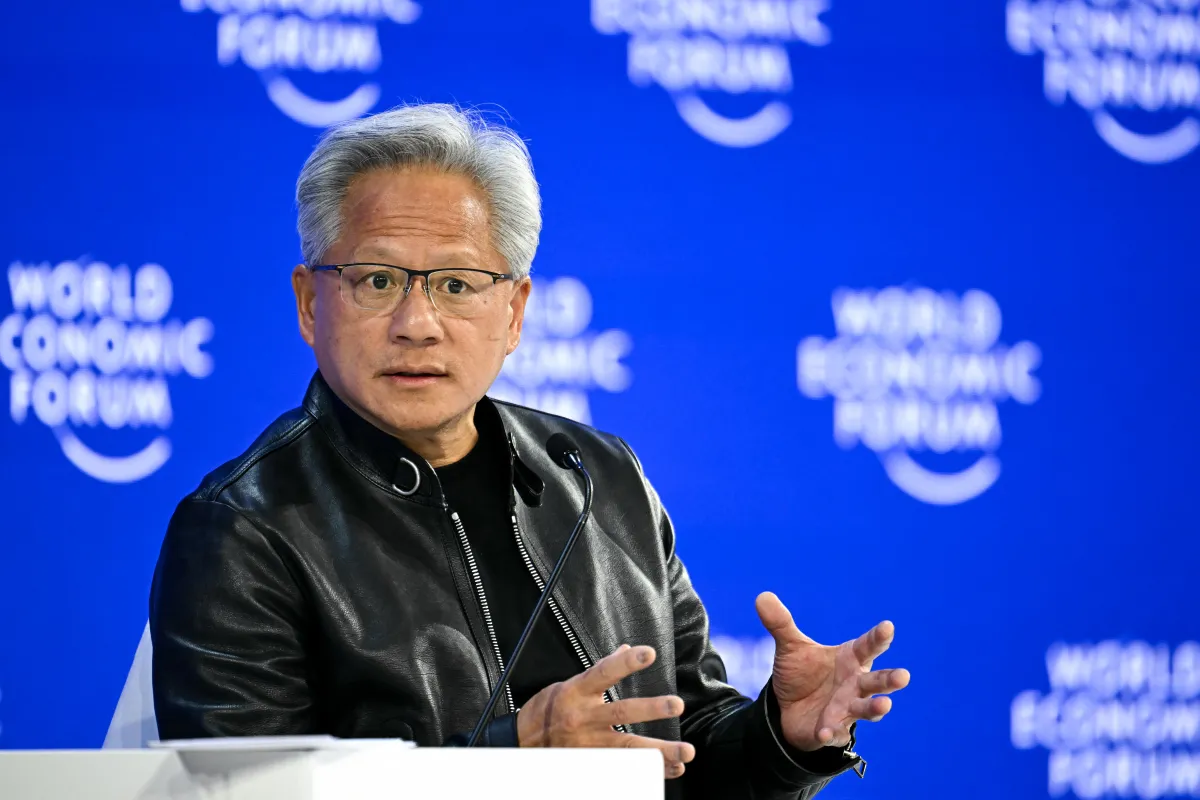
On September 14, 2026, Nvidia CEO Jensen Huang was speaking at the All-In Summit in Los Angeles when President Donald Trump called him.
Huang put Trump on speaker.
What followed was an unusually public snapshot of the debate now dividing parts of the AI industry.
Trump rejected calls for an AI slowdown and argued that the United States should not voluntarily give up technological ground. Huang agreed, telling him:
“We’re not going to let that happen, sir.”
The exchange lasted only moments.
But the disagreement behind it is much bigger.
On one side are leaders including Anthropic CEO Dario Amodei, OpenAI CEO Sam Altman and xAI's Elon Musk, who have called for stronger coordination and safeguards as AI capabilities accelerate.
On the other are leaders such as Huang and Meta CEO Mark Zuckerberg, who argue that companies can continue advancing while managing safety risks without imposing a coordinated slowdown.
And that makes this more than a story about Donald Trump and Jensen Huang.
It's a story about who gets to decide how fast the AI economy moves.
The Phone Call Was the Symptom. The Real Story Is the Split.
The easiest way to read the moment is:
Trump supports AI acceleration. Jensen Huang supports AI acceleration. End of story.
But that's too simple.
The more important development is that the disagreement is increasingly happening inside the technology industry itself.
Anthropic's Dario Amodei has called for a more deliberate pace of development and proposed measures including third-party evaluation of AI systems, coordination among democratic countries on safety standards, and eventually broader international cooperation.
OpenAI's Sam Altman has also supported stronger safety coordination, while Elon Musk has backed calls for slowing the pace of development.
Meanwhile, Huang has argued that AI progress should continue rapidly and that safety and innovation do not have to be treated as opposing goals. Meta's Mark Zuckerberg has similarly rejected a coordinated slowdown.
So the emerging divide isn't simply:
AI optimists vs. AI pessimists.
It's closer to:
How much acceleration can society absorb while keeping enough control over the systems being built?
And there is no consensus answer.
Why Jensen Huang Is So Important to This Debate
Huang isn't just another technology CEO commenting on AI.
Nvidia sits much closer to the physical foundation of the AI economy.
The models everyone is debating require enormous amounts of compute.
Compute requires chips.
Chips require data centers.
Data centers require electricity, networking, cooling and increasingly complex infrastructure.
That means the AI race isn't happening exclusively inside research labs.
It is becoming an industrial buildout.
And Nvidia is one of the companies supplying a critical layer of that infrastructure.
That's why Huang's position carries significance beyond a philosophical argument about AI research.
If AI development accelerates, demand for advanced computing infrastructure can accelerate with it.
If frontier AI development is deliberately slowed, the pace of that infrastructure expansion could change as well.
This is where the debate moves from software into hardware, capital expenditure and energy.
The AI Debate Is Becoming a Compute Debate
For years, discussions about AI safety were largely framed around models:
What can an AI system do?
How capable can it become?
Can it be controlled?
What happens if it behaves unpredictably?
Now another question is becoming impossible to ignore:
How much physical infrastructure are we willing to build to keep increasing those capabilities?
AI data centers consume enormous amounts of electricity, and new facilities have generated disputes over energy costs, land use and water consumption.
Recent polling cited by TechCrunch found that about seven in ten Americans opposed data-center construction in their local area, with environmental resources among the concerns respondents cited.
That creates a fascinating tension.
The AI industry can move incredibly quickly in software.
But physical infrastructure moves at the speed of:
power grids + permits + land + construction + chips + capital.
And those constraints cannot simply be solved by writing better code.
The “Slow Down” Argument Isn't Necessarily an Anti-AI Argument
This distinction matters.
Amodei's position isn't that AI should stop existing.
His argument is that the pace of capability development should be matched with stronger safety mechanisms.
His proposed approach includes independent evaluation and greater coordination around frontier AI safety.
That's fundamentally different from saying:
“Stop building AI.”
The disagreement is therefore about pace, governance and risk management.
That distinction gets lost surprisingly easily when the debate is reduced to headlines.
Then There's the Other Side of the Argument
The acceleration case rests on a different concern:
What if slowing down doesn't actually slow down the world?
If one company, country or group of countries deliberately reduces development while competitors continue, the technological gap could widen.
Trump explicitly framed the issue in geopolitical terms during the call with Huang, arguing that slowing America's AI progress could benefit China.
European companies have made a related argument from a different position: Reuters reported this week that several European AI firms are pushing back against U.S. calls for slower development, arguing that restraint could entrench the advantage of existing U.S. leaders rather than create a safer competitive environment.
That creates a genuine policy dilemma.
Move faster and you may increase technological and safety risks.
Move slower and you may create strategic and competitive risks.
Neither side gets to pretend the other problem doesn't exist.
What About the “AI Doomer” Question?
This is where the discussion needs some discipline.
A former Anthropic researcher, Jacob Coxon, recently resigned publicly over concerns that AI companies are moving toward increasingly autonomous and potentially dangerous systems. His claims received significant attention across the technology industry.
Those concerns have helped intensify the current debate.
But concerns about catastrophic AI risk should not automatically be treated as established predictions.
Even Dario Amodei's own writing emphasizes uncertainty and argues against treating AI catastrophe as inevitable.
That's an important distinction.
There is a difference between:
“This risk is impossible.”
and
“This risk is possible enough that we should prepare for it.”
The current debate is largely happening somewhere between those two positions.
The More Interesting Question: Who Controls the Pace?
This is where the story becomes much bigger than Nvidia.
Imagine AI progress as a system with several speed controls:
Model capability
How quickly frontier models improve.
Compute
How much hardware is available to train and run them.
Energy
How much electricity can be delivered to the infrastructure.
Capital
How much money investors and companies are willing to deploy.
Regulation
What governments permit, restrict or require.
Safety
How much evaluation and testing happens before increasingly capable systems are deployed.
Changing any one of these can affect the speed of the entire system.
That's why a debate about an AI “pause” isn't really about pressing one giant button.
There are multiple levers.
And different groups are arguing over different ones.
What This Means for Companies Building With AI
This is the part founders and engineering leaders should pay attention to.
You don't need to predict whether AI development will accelerate or slow down.
You need to build in a way that survives either scenario.
That means avoiding unnecessary dependence on one model provider.
It means designing architectures that can accommodate model changes.
It means treating inference cost as an operating variable rather than a fixed assumption.
It means keeping proprietary data and workflows at the center of your product rather than assuming the model itself will remain your competitive advantage.
And it means asking a question that many startups aren't asking yet:
What happens to our product if the underlying AI layer changes six months from now?
Because it will.
Models will improve.
Prices will change.
Context windows will change.
APIs will change.
Open models will improve.
New providers will appear.
Some providers will become dramatically more expensive, or dramatically cheaper.
The companies that build durable products won't necessarily be the ones that pick today's “best” model.
They'll be the ones that can adapt when the model landscape changes.
The Real AI Infrastructure Race Is Just Beginning
The Huang-Trump exchange is easy to dismiss as a strange moment at a technology conference.
A president calls an AI executive.
The executive puts him on speaker.
The crowd applauds.
Then everyone moves on.
But zoom out and something much more consequential is happening.
AI development is colliding with:
national competitiveness
energy infrastructure
semiconductor supply
data-center construction
capital markets
employment
regulation
cybersecurity
AI safety
The question is no longer simply:
“How powerful can AI become?”
It's becoming:
“How quickly can the world build the physical, economic and regulatory infrastructure required to support increasingly powerful AI?”
That's a much harder question.
And it doesn't have a one-line answer.
What Jensen Huang's Moment Actually Tells Us
The most important thing about Huang putting Trump on speaker wasn't that it proved one side of the AI debate correct.
It showed something else:
The argument over AI's future has moved from the research lab into the center of economic and political decision-making.
The people asking for more caution are increasingly public.
The people pushing for continued acceleration are increasingly public.
And the infrastructure required to make either vision possible is already being built.
For companies building with AI, the practical lesson is simpler than the political debate:
Don't build your strategy around the assumption that AI will stand still.
Build for changing models.
Build for changing economics.
Build for changing regulation.
Build for changing infrastructure.
Because whatever happens to the debate over acceleration versus restraint, one thing is already clear:
AI is no longer just a software story.
It's becoming an infrastructure story, an energy story, a capital story, and ultimately, a business strategy story.
Related Articles